
Cyber Insurance for SMEs in Singapore: What It Covers and What It Doesn’t

Introduction: Why Cyber Insurance Matters for Singapore SMEs
For many small and medium enterprises (SMEs) in Singapore, “cyber risk” still sounds like something that only affects banks, tech companies, or large multinationals. In reality, attackers often prefer smaller businesses because they tend to have weaker defences but still hold valuable data—customer details, invoices, payroll files, intellectual property, and more.
At the same time, Singapore’s business environment is becoming more digital and more regulated:
- The Personal Data Protection Act (PDPA) imposes obligations on organisations that collect, use, or disclose personal data, including mandatory data breach notification for certain incidents.
- Many SMEs are adopting cloud services, remote work, and online payment systems.
- Common threats in the region include ransomware, business email compromise (BEC), and phishing scams targeting finance and HR staff.
Cyber insurance has emerged as one way for SMEs to manage the financial impact of a cyber incident. However, it is not a magic shield, and it does not replace the need for good cybersecurity practices. Understanding what a typical policy covers—and what it doesn’t—will help you decide if it fits into your overall risk management approach.
This article provides a practical, non-technical overview for Singapore-based SMEs. It is based on common cyber insurance practices internationally, adjusted where relevant for the Singapore context. It is not legal, financial, or insurance advice; you should consult qualified professionals before making decisions.

1. What Is Cyber Insurance?
Cyber insurance (also called cyber risk insurance or cyber liability insurance) is a type of insurance policy designed to help organisations manage the costs and consequences of cyber incidents. These incidents may include:
- Hacking, ransomware, or malware infections
- Accidental data leaks or misdirected emails
- Compromised email accounts used for fraudulent payment requests
- Denial-of-service attacks disrupting your website or systems
Broadly, cyber insurance aims to cover two categories of loss:
- First-party losses – Costs your own organisation incurs directly from the incident (e.g., IT forensics, data restoration, business interruption).
- Third-party liability – Claims made against your organisation by others (e.g., customers, partners, regulators) as a result of the incident.
In Singapore, cyber insurance is becoming more relevant because:
- SMEs are frequent targets of ransomware and email fraud in Southeast Asia.
- Many SMEs now hold significant volumes of personal data, and PDPA breaches can lead to investigations and penalties.
- Supply-chain expectations are rising: larger customers sometimes ask their vendors (including SMEs) to show evidence of cyber insurance and basic security controls.
Cyber insurance does not prevent an attack from happening, but it can:
- Give you access to expert help during a crisis.
- Reduce the financial shock of dealing with a serious incident.
- Support your recovery and help maintain business continuity.

2. Singapore Context: Regulations and Risk (High-Level Only)
Without going into legal detail, there are a few Singapore-specific considerations SMEs should be aware of:
- PDPA obligations:
If your business collects or uses personal data about individuals (customers, employees, etc.), the PDPA requires you to protect that data and, in some cases, notify the Personal Data Protection Commission (PDPC) and affected individuals when a data breach occurs. Cyber insurance may help with some of the costs associated with investigating and responding to such breaches, depending on the policy. - Sector-specific guidelines (e.g., MAS TRM):
If you are in the financial sector or provide services to financial institutions, the Monetary Authority of Singapore’s Technology Risk Management (TRM) Guidelines set expectations around IT and cyber risk management. Some organisations in these sectors may see cyber insurance as part of a broader risk strategy, but compliance is driven primarily by strong internal controls, not by insurance. - Growing threat landscape:
Regional reports regularly highlight ransomware and BEC as major threats in Asia-Pacific. For SMEs, a single successful phishing email that leads to a fraudulent payment can be financially devastating.
Again, this article does not provide legal or regulatory advice. If you need to understand your PDPA or sector-specific obligations, you should speak to legal or compliance professionals.

3. What Cyber Insurance Usually Covers
Every insurer and policy is different. Coverage depends on the specific wording, limits, and conditions in your contract. However, many SME-focused cyber policies commonly include some or all of the following components.
3.1 Incident Response and Breach Coaching
When an incident occurs, knowing what to do in the first 24–72 hours is critical. Many policies include:
- Access to an incident response hotline (often 24/7).
- Breach coaches – usually lawyers or specialist consultants who guide you through:
- Initial triage and containment steps.
- Communication with affected stakeholders.
- Regulatory notification considerations (e.g., whether PDPC notification might be required).
- Coordination of technical, legal, and PR resources.
This support can be more valuable than the direct reimbursement of costs, especially for SMEs that do not have in-house cybersecurity or legal teams.
3.2 Forensic Investigation Costs
After containment, you need to understand what happened:
- How did the attacker get in?
- Which systems were affected?
- What data might have been accessed or exfiltrated?
- How far back does the compromise go?
Cyber insurance policies often cover IT forensics services to:
- Analyse logs and system images.
- Determine the scope and impact of the breach.
- Provide reports that may be required by regulators, customers, or your board.
Note: Forensic investigations can be expensive. Policies may include sub-limits (a lower cap specifically for this category of cost).
3.3 Data Restoration and System Recovery
If data has been corrupted, encrypted, or erased, many policies provide coverage for:
- Restoring data from backups (including the labour time of IT specialists).
- Rebuilding or reconfiguring systems and applications.
- Decontaminating systems (removing malware, tightening configurations).
However, coverage often focuses on reasonable and necessary costs to return you to the state you were in before the incident. Extra upgrades or long-delayed modernisation efforts may not be covered.
3.4 Business Interruption and Extra Expense
Cyber incidents don’t just cost IT money; they can stop you from earning revenue.
Many policies include coverage for:
- Business interruption loss – Lost profit or revenue due to your systems being down or significantly impaired as a result of a covered cyber event.
- Extra expenses – Additional, reasonable expenses incurred to reduce the impact of the interruption, such as:
- Temporary software licences.
- Overtime for staff.
- Emergency outsourcing or manual workarounds.
Important points:
- There is usually a waiting period (for example, 8–24 hours) before business interruption losses start to be counted.
- Loss calculations can be complex and may depend on your financial records.
- Loss of future opportunities not directly tied to the specific incident (e.g., “we might have grown 30% next year”) is typically not covered.

3.5 Third-Party Liability (Customer and Partner Claims)
If a cyber incident affects your customers, employees, or partners, they may make claims against your organisation. Common examples:
- Customers whose personal data is leaked allege you failed to protect their information.
- A business partner claims losses because your compromised system led to fraud involving their accounts.
Many cyber policies include third-party liability coverage for:
- Legal defence costs.
- Settlements or damages you are legally obligated to pay (subject to policy terms and limits).
- Certain contractual liability exposures, if explicitly included.
However:
- Liability coverage is highly dependent on policy wording.
- Contractual penalties or “liquidated damages” in your contracts may be limited or excluded.
- Intentional or dishonest acts are generally not covered.
3.6 Regulatory Investigation and Fines
If your incident involves personal data, you may face a regulatory investigation, for example under the PDPA.
Many cyber policies may cover:
- Legal costs associated with responding to a regulatory investigation.
- Certain fines and penalties, but only:
- To the extent allowed by law in the relevant jurisdiction; and
- As explicitly stated in the policy.
In Singapore, the insurability of particular types of fines or penalties may be limited or uncertain. Some policies exclude fines altogether, while others cover certain categories subject to legal permissibility. This area is complex and evolving, and you should seek advice from:
- Your insurance broker or insurer, and
- Legal counsel, if regulatory risk is a key concern.
3.7 Notification and Credit/Identity Monitoring Costs
If personal data is compromised, you may need to:
- Notify affected individuals.
- Set up call centres or provide FAQs.
- Offer credit monitoring or identity protection services (more common where financial and identity data is involved).
Some cyber policies include coverage for:
- Drafting and sending notification letters or emails.
- Operating hotlines or call centres.
- Providing credit monitoring services, where appropriate and available.
In Singapore, the exact notification requirements depend on the PDPA and PDPC guidance. Your breach coach or legal advisors (sometimes arranged via the insurer) can help you determine what is needed.

4. What Cyber Insurance Often Doesn’t Cover: Common Exclusions and Limitations
No policy covers everything. Understanding exclusions is just as important as understanding coverage. The points below are general examples; your own policy may differ significantly.
Always read your policy wording and speak with your broker, insurer, or legal advisers for specific guidance.
4.1 Acts of War or State-Sponsored Cyber Attacks
Most cyber insurance policies have war exclusions, which traditionally exclude:
- War, invasion, or military operations.
- Hostile acts by or on behalf of a state.
In recent years, insurers have also focused on “cyber war” and attacks attributed to nation-states. Policies may:
- Exclude certain state-sponsored attacks outright.
- Apply specific conditions or narrower definitions.
- Require a certain level of government attribution before an exclusion applies.
This is an evolving area. If you handle sensitive data, operate critical services, or are in a sector more likely to be targeted by sophisticated actors, you should discuss this specifically with your broker or insurer.
4.2 Pre-Existing Vulnerabilities or Known but Unremediated Issues
Many policies contain exclusions for incidents arising from:
- Vulnerabilities or security issues you already knew about but did not reasonably address.
- Systems that were not patched or maintained despite known critical risks.
For example:
- If your IT team is aware of a critical vulnerability in a public-facing server and chooses to ignore it for months, a subsequent breach through that vulnerability may be disputed by the insurer.
- If you falsely state in the proposal form that all systems are fully patched, but they are not, coverage could be impacted.
Accuracy and good faith in your risk disclosures are essential.
4.3 Failure to Maintain Minimum Security Standards
Policies often require you to maintain minimum security measures, such as:
- Using up-to-date anti-malware software.
- Applying critical security patches within a certain timeframe.
- Maintaining regular backups.
- Using multi-factor authentication (MFA) on certain accounts.
These requirements might be:
- Stated upfront in the policy.
- Included in endorsements or warranty clauses.
- Reflected in the answers you provide on proposal forms or security questionnaires.
If an incident occurs and the insurer finds that you did not maintain these agreed controls, they may:
- Reduce the claim payment.
- Apply additional deductibles.
- In serious cases, decline coverage for that incident.

4.4 Intentional or Fraudulent Acts by Insiders
Cyber insurance typically focuses on accidental or external incidents, not deliberate wrongdoing by you or your senior leadership.
Policies commonly exclude:
- Intentional or fraudulent acts by directors, officers, or key staff.
- Collusion with external attackers.
- Incidents where senior management knowingly participated in or authorised fraudulent activity.
Some policies may provide limited coverage for employee dishonesty or social engineering scams, but this is often tightly defined and may require additional endorsements or crime insurance.
4.5 Certain Fines, Contractual Penalties, and Future Profits
Common exclusions or limitations include:
- Contractual penalties and liquidated damages – Many policies either exclude or strictly limit coverage for amounts you must pay due to contractual penalty clauses.
- Fines that are uninsurable under Singapore law – If local law prohibits insuring certain types of penalties, the insurer will not cover them.
- Loss of future profits not directly tied to an insured event – For example, a reputational hit that might reduce business over the next few years is generally not covered, beyond the defined business interruption period.
4.6 Standard Hardware Replacement
Cyber insurance is usually focused on intangible losses (data, software, disruption) and related services, not general IT hardware replacement.
Often:
- Physical damage to hardware (e.g., fire, water, physical theft) is handled under your property or equipment insurance.
- Cyber policies may cover reinstallation and reconfiguration of software, but not the cost of replacing old or outdated hardware unless there is a specific, covered cause.
Clarify with your insurer how cyber, property, and other policies interact to avoid gaps or duplicates.

5. How Insurers Assess Cyber Risk—and How Your Controls Help
Before offering coverage, insurers need to understand your cyber risk profile. For SMEs, this is usually done in a practical, questionnaire-based way.
5.1 Typical Assessment Methods
Insurers may use one or more of the following:
- Proposal forms / application forms
These ask about your business, data types, revenue, industry, and existing security measures. - Security questionnaires
More detailed questions about:- Use of MFA, backups, patching processes.
- Endpoint protection and monitoring.
- Incident response planning.
- Use of cloud services and third-party vendors.
- External scans or ratings
Some insurers use external tools to:- Check for exposed services (e.g., open remote desktop).
- Look for signs of known vulnerabilities.
- Assess your domain’s email security configurations (e.g., SPF, DKIM, DMARC).
Insurers then use this information to:
- Decide whether to offer coverage.
- Set premiums and deductibles.
- Determine sub-limits and exclusions.
- Sometimes, make coverage conditional on improvements being implemented.
5.2 Key Security Controls That Insurers Like to See
The following controls are commonly required or strongly favoured by insurers and are realistic for most SMEs. Implementing them not only improves your security but can also make it easier to obtain coverage on reasonable terms.
5.2.1 Regular Data Backups and Tested Restoration
- Maintain regular backups of critical data (daily or more frequent, depending on your operations).
- Follow the 3-2-1 rule where possible:
- 3 copies of data,
- 2 different media types,
- 1 copy stored offline or in a separate, secure environment.
- Periodically test restoration to ensure backups work and you know how long recovery takes.
Insurer view: Frequent, tested backups significantly reduce the impact of ransomware and other destructive attacks, and make claims more predictable.
5.2.2 Multi-Factor Authentication (MFA)
Prioritise MFA for:
- Corporate email accounts (e.g., Microsoft 365, Google Workspace).
- Remote access (VPN, remote desktop solutions).
- Administrator accounts for servers, cloud platforms, and critical applications.
Insurer view: BEC and account takeover are among the most common causes of claims. MFA is one of the most effective defences and is often considered a basic requirement.
5.2.3 Patch and Vulnerability Management
- Maintain a clear process for identifying and applying security patches, especially for:
- Operating systems.
- Internet-facing applications (web servers, VPN gateways, email systems).
- Use automated patch management tools where possible.
- Remove or isolate unsupported or end-of-life systems.
Insurer view: Many breaches exploit known vulnerabilities for which patches already exist. Demonstrating a disciplined patching process is a strong positive signal.
5.2.4 Endpoint Protection and Basic Logging/Monitoring
- Deploy reputable endpoint protection (anti-malware/EDR) on all servers and endpoints (desktops, laptops).
- Ensure logging is enabled for critical systems (e.g., authentication logs, admin actions).
- Set up alerts for high-risk events, such as:
- Multiple failed logins.
- New admin accounts being created.
- Unusual outbound traffic patterns.
Insurer view: Even basic monitoring improves detection and containment, which can reduce the scale and cost of incidents.
5.2.5 Email Security and User Awareness
- Implement email security controls:
- Spam and phishing filters.
- Attachment and link scanning.
- Domain protection (SPF, DKIM, DMARC) to reduce spoofing.
- Provide regular training for staff on:
- Recognising phishing and social engineering.
- Verifying payment instructions (call-back procedures).
- Reporting suspicious emails or system behaviour.
Insurer view: Many BEC and fraud-related claims start with a single phishing email. Training and technical protections reduce both frequency and severity.
5.2.6 Access Controls and Least Privilege
- Ensure staff only have access to the data and systems they need to do their jobs (least privilege).
- Use role-based access control for shared systems.
- Remove access promptly when employees leave or change roles.
- Review admin and privileged accounts regularly.
Insurer view: Reduced access limits the damage if an account is compromised and can also help contain insider risk.
5.2.7 Incident Response Planning and Tabletop Exercises
- Create a simple incident response plan covering:
- Who to call (internal and external) in different scenarios.
- How to isolate affected systems.
- How to decide on public and customer communications.
- How to engage with your insurer’s incident response partners.
- Run tabletop exercises (even informal) to walk through realistic scenarios:
- Ransomware encrypting a file server.
- BEC leading to fraudulent payment instructions.
- Data leakage from a misconfigured cloud storage bucket.
Insurer view: Organisations that prepare in advance tend to handle incidents faster and more effectively, leading to lower losses.
5.3 Controls and Premiums: Managing Expectations
Strong controls:
- Do not guarantee low premiums, but
- Generally improve your insurability and can:
- Reduce premiums compared to a weaker security posture.
- Help you secure broader coverage or fewer exclusions.
- Make the claims process smoother, as you can show reasonable care.
Conversely, weak or absent controls may lead to:
- Higher premiums.
- Narrower coverage.
- Declined applications or strict conditions.

6. Practical Guidance for SMEs
6.1 Questions to Ask Your Broker or Insurer
When evaluating cyber insurance options, consider asking:
Coverage and Limits
- What specific events are covered (e.g., ransomware, BEC, accidental data loss)?
- What are the overall policy limits and sub-limits for key areas such as:
- Forensics.
- Business interruption.
- Regulatory investigations and fines.
- Social engineering / funds transfer fraud (if offered).
- Is there coverage for incidents involving third-party service providers (e.g., cloud platforms, IT vendors)?
Exclusions and Conditions
- What are the major exclusions I should pay attention to (e.g., war, insider fraud, known vulnerabilities)?
- Are there any warranties or conditions relating to:
- MFA.
- Backup frequency.
- Patch timelines.
- What happens if we temporarily fall below those standards (e.g., MFA not yet rolled out to all users)?
Business Interruption Details
- How is business interruption loss calculated?
- What is the waiting period before coverage kicks in?
- How long is the indemnity period (the period during which losses can be claimed)?
Incident Response Support
- Do we get access to approved incident response providers, legal counsel, and PR firms?
- Is there a 24/7 hotline?
- How quickly can assistance be mobilised?
Regulatory and PDPA Issues
- To what extent does the policy cover regulatory investigations and, where legally permitted, fines or penalties?
- Does coverage extend to costs of notifying affected individuals and handling PDPA-related communication?
6.2 Questions to Ask Your IT Team or IT Vendor
Internally (or with your managed service provider), consider these questions:
- Do we have regular, tested backups for all critical systems and data?
- Is MFA enabled for:
- Email?
- Remote access?
- Admin accounts?
- What is our patch management process? How quickly do we apply critical security updates?
- What endpoint protection and email filtering do we use? Are they centrally managed and monitored?
- Do we have a documented incident response plan? Who is in the “crisis team”?
- How do we manage user access and privileges? Are admin accounts tightly controlled?
- Can we show evidence of our controls (e.g., reports, policies) if an insurer asks or if we make a claim?
These questions align your technical posture with insurer expectations and reduce the risk of unpleasant surprises during a claim.
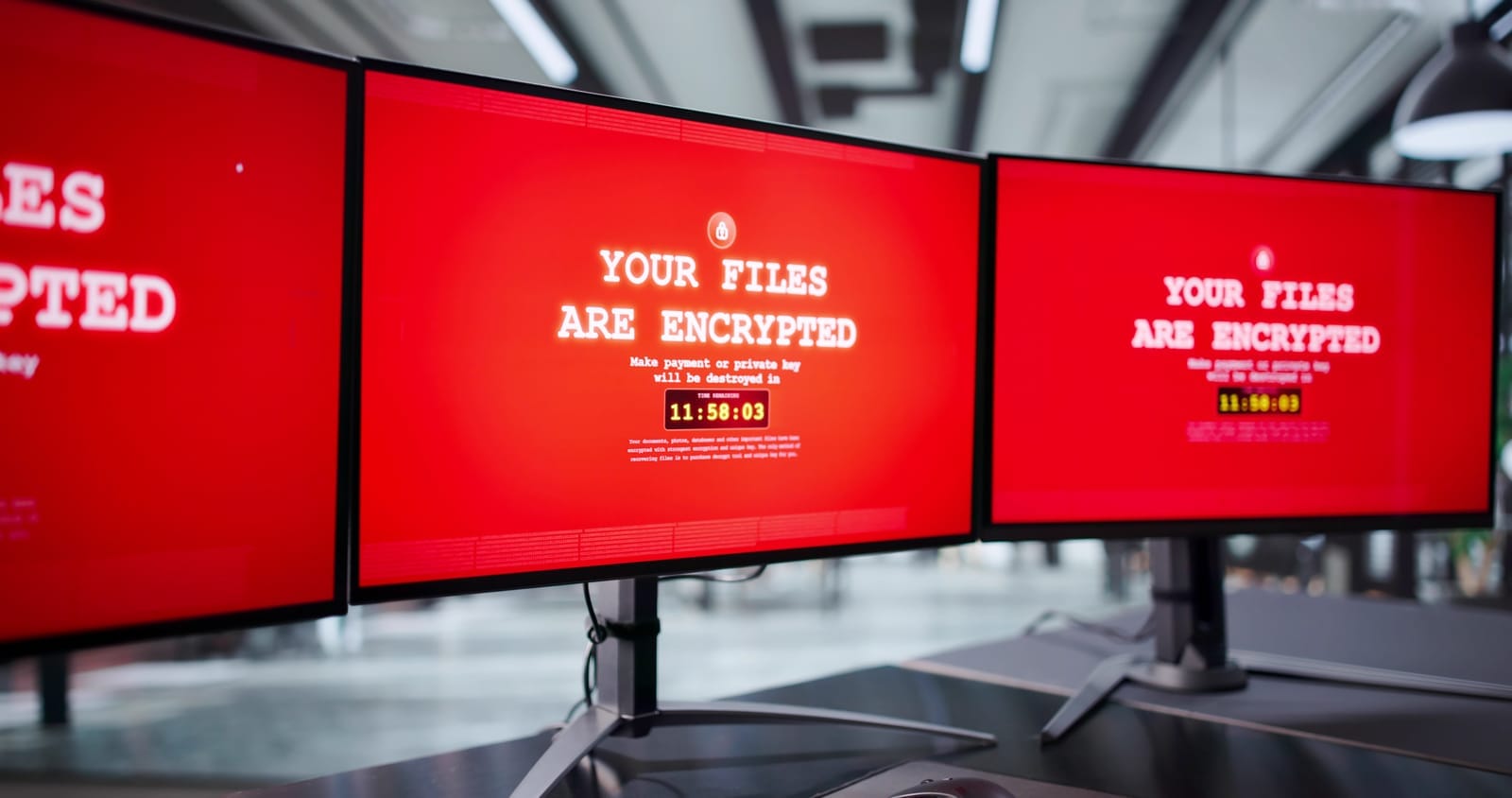
6.3 Example Scenarios: How a Cyber Policy Might Respond
The following scenarios are simplified and illustrative. Actual coverage depends entirely on your specific policy wording, limits, and exclusions.
Scenario 1: Ransomware on Your File Server
A staff member opens a malicious attachment in a phishing email. Ransomware spreads and encrypts your on-premise file server and some workstations. Your operations are disrupted for several days.
Potential policy response (depending on terms):
- Incident response and forensics:
- Insurer connects you with a panel incident response firm.
- Forensic specialists investigate entry point, spread, and whether data was exfiltrated.
- Data restoration and system recovery:
- Covered costs may include:
- Restoring from backups.
- Rebuilding the affected server.
- Overtime for your IT staff or vendor.
- If backups are incomplete or not recent, more manual reconstruction work may be required, which might be partially covered up to your sub-limits.
- Covered costs may include:
- Business interruption:
- If your operations are halted, you may claim:
- Lost profit or revenue for the covered downtime after the waiting period.
- Extra expenses for temporary workarounds.
- If your operations are halted, you may claim:
- Regulatory and notification costs:
- If personal data was accessed or likely exfiltrated, the policy may cover:
- Legal advice on PDPA notification requirements.
- Costs of notifying affected individuals.
- Some regulatory investigation costs.
- If personal data was accessed or likely exfiltrated, the policy may cover:
Possible gaps or issues:
- If you had no recent backups or they were also encrypted and you had been warned about this risk previously, the insurer may scrutinise your control environment closely.
- If you had warranted in the policy that MFA and certain endpoint controls were in place, but they were not, this mismatch could affect the claim.
- Payment of the ransom itself may or may not be covered, depending on your policy and legal considerations (and paying ransom can raise broader risk and ethical concerns).
Scenario 2: Business Email Compromise (BEC) and Fraudulent Payment
Your finance manager’s email account is compromised because they reused a password that leaked from another service. The attacker monitors email, then sends a realistic-looking request to change bank details for a major supplier. Your accounts team transfers a large payment to the attacker’s account.
Potential policy response (depending on terms):
- Forensic investigation:
- Investigation into how the account was compromised.
- Review of mailbox rules and data access.
- Incident response and legal support:
- Guidance on communications with the affected supplier and internal stakeholders.
- Advice on any necessary notifications (internal, regulatory, banking partners).
- Funds transfer / social engineering coverage:
- Some cyber policies (or add-ons) include limited coverage for social engineering or funds transfer fraud, subject to:
- Specific conditions (e.g., dual approvals, call-back procedures in place).
- Sub-limits, which may be much lower than the main policy limit.
- Some cyber policies (or add-ons) include limited coverage for social engineering or funds transfer fraud, subject to:
Possible gaps or issues:
- Many policies exclude direct financial loss due to voluntary payments made based on fraudulent instructions, unless you have a specific endorsement (e.g., cybercrime or social engineering cover).
- If your payment verification procedures were weak or not followed, coverage may be reduced or denied.
- BEC often leads to reputational issues and strained relationships with suppliers, which are not always directly compensable under the policy.

7. Coordinating Between Management, Finance, and IT
Buying cyber insurance is not just a “technical” decision or a “finance” decision. It sits at the intersection of:
- Management/Board – Sets risk appetite, ensures overall governance, and decides on investment in security and insurance.
- Finance – Evaluates costs, limits, and potential financial exposure.
- IT / Security / Vendors – Understands the technical environment and practical capabilities.
To get value from cyber insurance:
- Involve all three groups in discussions with your broker or insurer.
- Make sure IT can realistically support any security control requirements implied by the policy.
- Align the insurance limits and scope with:
- Your risk profile (e.g., how dependent you are on digital operations).
- Your contractual obligations to customers and partners.
- Your regulatory obligations.
This coordination also helps ensure that, during an incident, everyone knows their role and how to engage the insurer’s resources.

8. Conclusion and Key Takeaways
Cyber insurance can be a useful part of an SME’s risk management toolkit in Singapore, especially in a landscape where ransomware, business email compromise, and data breaches are increasingly common. However, it is not a substitute for solid cybersecurity practices, and it does not guarantee that all cyber-related losses will be covered.
Key points to remember:
- Coverage varies widely. Many policies include incident response, forensics, data restoration, business interruption, third-party liability, and some regulatory and notification costs—but only as defined by your specific wording and limits.
- Exclusions matter. Be aware of areas commonly excluded or tightly limited, such as war or state-sponsored attacks, known but unremediated vulnerabilities, failure to maintain minimum security standards, intentional insider acts, certain fines, and standard hardware replacement.
- Your controls influence your insurability. Practical measures like backups, MFA, patch management, endpoint protection, email security, access controls, and incident response planning are not just good practice—they can make insurance more accessible and robust.
- Ask the right questions. Engage your broker or insurer on coverage, exclusions, sub-limits, waiting periods, and incident response support. Ask your IT team or vendor how your current controls align with insurer expectations.
- Coordinate internally. Management, finance, and IT should work together to select and maintain appropriate coverage and controls.
Used thoughtfully, cyber insurance can help SMEs in Singapore navigate the financial and operational impact of cyber incidents, while encouraging better security practices over time.
Disclaimer
This article is for general information only. It is based on common international cyber insurance practices with reference to the Singapore context but:
- Does not constitute legal, financial, or insurance advice.
- Does not interpret or apply any specific law or regulation (including the PDPA or any MAS guidelines) to your situation.
- Does not replace professional advice based on your organisation’s specific circumstances and policy wording.
Policy terms, coverage, exclusions, and the insurability of particular types of loss or fines vary widely between insurers and over time. Before purchasing or relying on cyber insurance, you should consult:
- A qualified insurance professional (e.g., broker or insurer representative), and
- Where appropriate, legal counsel or compliance professionals familiar with Singapore law and regulations.