2025 Update: Top Cybersecurity Threats Facing Singapore SMEs (And How to Defend Against Them)

In 2025, cybersecurity is no longer just an “IT issue” for large enterprises. For Singapore SMEs, it has become a core business risk.
With more businesses moving to cloud systems, accepting digital payments, supporting hybrid work, and relying on third‑party apps, the attack surface is bigger than ever. At the same time, cybercriminals have become more organised and sophisticated, using automation and AI to target companies of every size.
SMEs in Singapore are increasingly in the crosshairs because:
- They often lack a dedicated security team.
- IT is usually handled by a small in‑house team or a “call‑when-broken” vendor.
- Many still rely on outdated on‑premise systems or ad‑hoc cloud setups.
For attackers, this combination makes SMEs a high‑value, low‑effort target.
In this 2025 update, we’ll walk through the top cybersecurity threats facing Singapore SMEs today and, more importantly, what you can do about them—using clear, non‑technical language and practical steps you can act on.

Threat 1: Ransomware – When Your Business Is Locked Out of Its Own Data
What is ransomware?
Ransomware is a type of malicious software (malware) that locks or encrypts your files and systems so you can’t use them. The attackers then demand a ransom payment, often in cryptocurrency, in exchange for a decryption key or a promise not to leak your data.
In simple terms:
Your business data is taken hostage, and you’re told to pay to get it back.
How ransomware typically hits Singapore SMEs
In recent years, SMEs in sectors like retail, F&B, logistics, professional services, and healthcare in Singapore have reported ransomware incidents. Common impacts include:
- Total business downtime
Point‑of‑sale systems, accounting software, inventory systems, and shared drives suddenly stop working. - Loss of critical data
Files on servers and staff laptops are encrypted; sometimes including customer records, project files, and financial documents. - Reputational and regulatory risk
If customer data is stolen and leaked, it can trigger reputational damage and potential obligations under the PDPA. - Costly recovery
Even if you don’t pay the ransom (which is strongly discouraged by law enforcement and regulators), the cost of downtime, recovery work, and rebuilding systems can be significant.
A realistic mini‑scenario
A small logistics firm in Singapore receives what looks like a routine shipping notice attachment. A staff member opens it, not realising it’s malicious. Within hours, shared folders on the server are encrypted. Drivers can’t access delivery schedules, customer service can’t see order details, and operations grind to a halt.
The company spends days working with IT to rebuild systems and restore data. Some data is recovered from backups, but the downtime results in delayed shipments, unhappy customers, and lost revenue.
Key ransomware defences for SMEs
You can’t reduce risk to zero, but you can make ransomware far less damaging and far less likely to succeed.
- Cloud‑based, versioned backups with tested recovery
- Store backups securely in the cloud, separate from your main systems (so ransomware can’t easily reach them).
- Use versioning, so if files are encrypted, you can roll back to a clean version.
- Regularly test restores, not just the backup process — so you know, in practice, how fast you can bring systems back online.
- Modern endpoint protection and EDR
- Install endpoint protection (modern antivirus/anti‑malware) and EDR (Endpoint Detection & Response) on laptops, PCs, and servers.
- These tools look for suspicious behaviour, not just known viruses, helping to detect and contain ransomware early.
- Least‑privilege access and MFA
- “Least privilege” simply means staff only have access to what they need to do their jobs—no more.
- If every user has full access to everything, ransomware can spread much more widely.
- Enforce multi‑factor authentication (MFA) for admin and remote access: for example, a password plus a one‑time code on a phone.
- Staff awareness and incident response planning
- Train employees to recognise suspicious attachments, links, and software prompts.
- Have a simple incident response plan:
- Who to call if something looks wrong.
- How to isolate an infected machine (e.g., unplug network cable, turn off Wi‑Fi).
- How management will decide on communications and next steps.
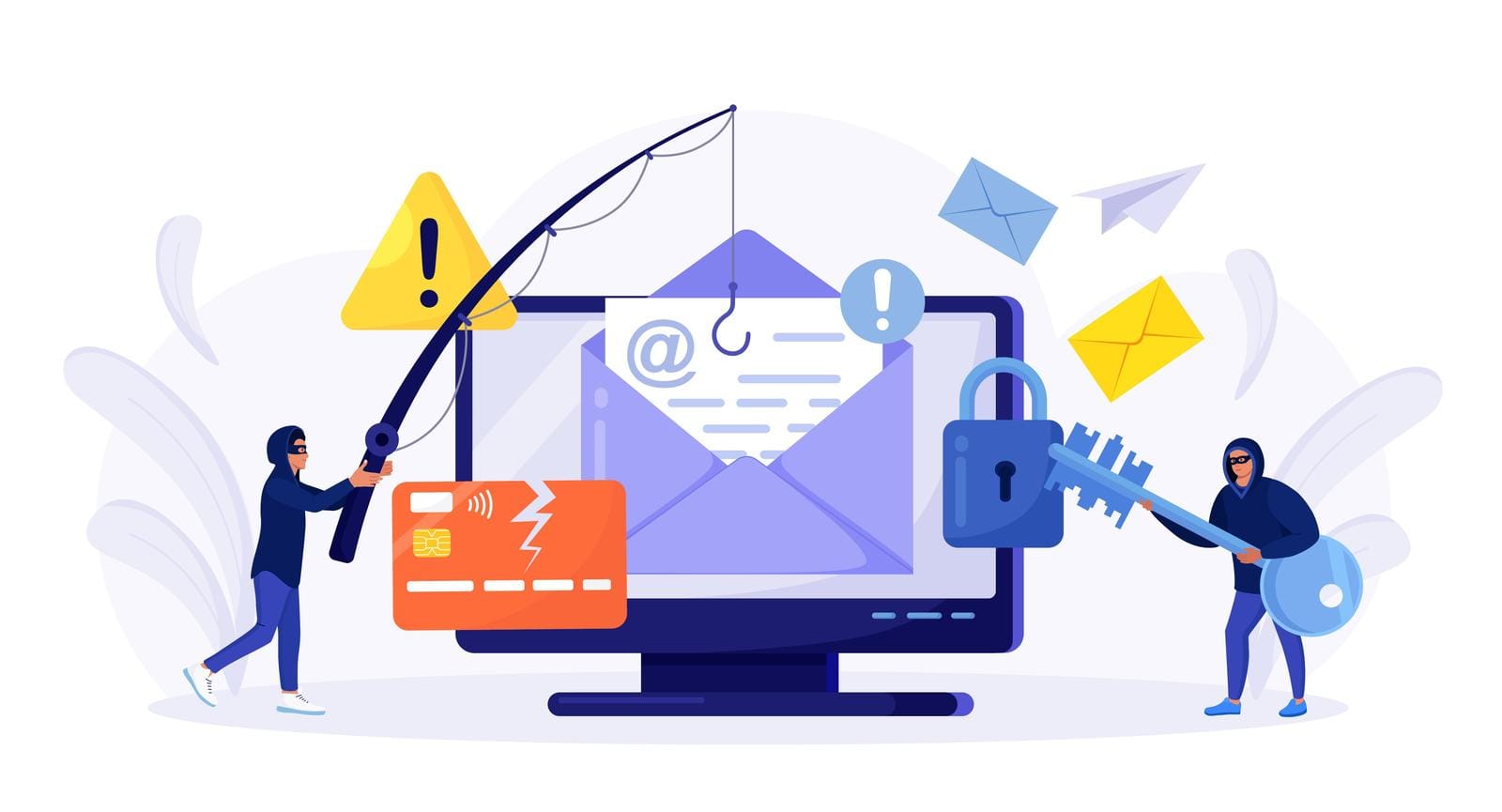
Threat 2: Phishing & Business Email Compromise – When Attackers Pretend to Be You (or Your Partners)
What is phishing?
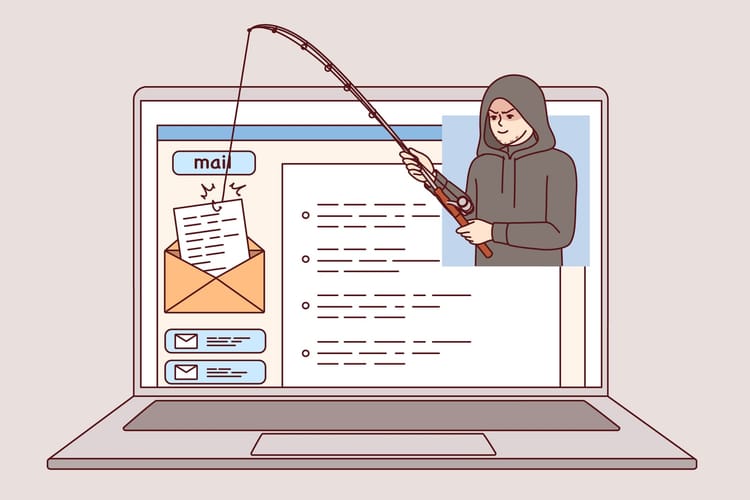
Phishing is when attackers send fake messages — usually by email, but also via SMS, WhatsApp, and social media — to trick people into:
- Clicking a malicious link,
- Opening a harmful attachment, or
- Giving away passwords or sensitive information.
The messages often look like they come from trusted sources: banks, government agencies, delivery companies, or even your own colleagues or directors.
What is Business Email Compromise (BEC)?
Business Email Compromise is a more targeted form of phishing. Instead of sending generic scam emails, attackers:
- Gain access to a real business email account (e.g., a director, finance manager, or vendor),
- Study how the victim communicates, and then
- Send very convincing instructions to staff, customers, or suppliers.
Examples include fake requests to:
- Change bank account details for vendor payments.
- Urgently transfer funds for a “confidential deal”.
- Update payroll account numbers for a senior executive.
Because these emails come from real accounts or look almost identical to them, they are much harder for staff to spot.
How phishing and BEC hit Singapore SMEs
Singapore SMEs are frequently targeted through:
- Fake vendor invoices
An attacker impersonates a vendor and sends a revised invoice with new bank details. - Payroll and HR scams
A bogus email from a “staff member” requests changing salary payment account details. - Fake IRAS, bank, or courier messages
Emails or SMSes claiming you must log in urgently to avoid penalties, confirm a delivery, or verify a transaction. - QR code and messaging scams
Malicious QR codes on posters, emails, or chat apps leading to fake login pages, or messages via WhatsApp/Telegram asking you to “verify” your account.
These scams often succeed because they leverage urgency and authority — “Do this now or something bad happens” — and because staff are busy and may not stop to verify.
A realistic mini‑scenario
A growing professional services firm receives an email that appears to be from a long‑standing overseas supplier. The email address looks right at a glance, and the tone sounds familiar. The message says the supplier has changed banks and provides new payment details.
Finance processes a five‑figure payment. Weeks later, the real supplier asks why they haven’t been paid. Only then does the team realise the earlier email was from a lookalike domain, and the funds are gone.
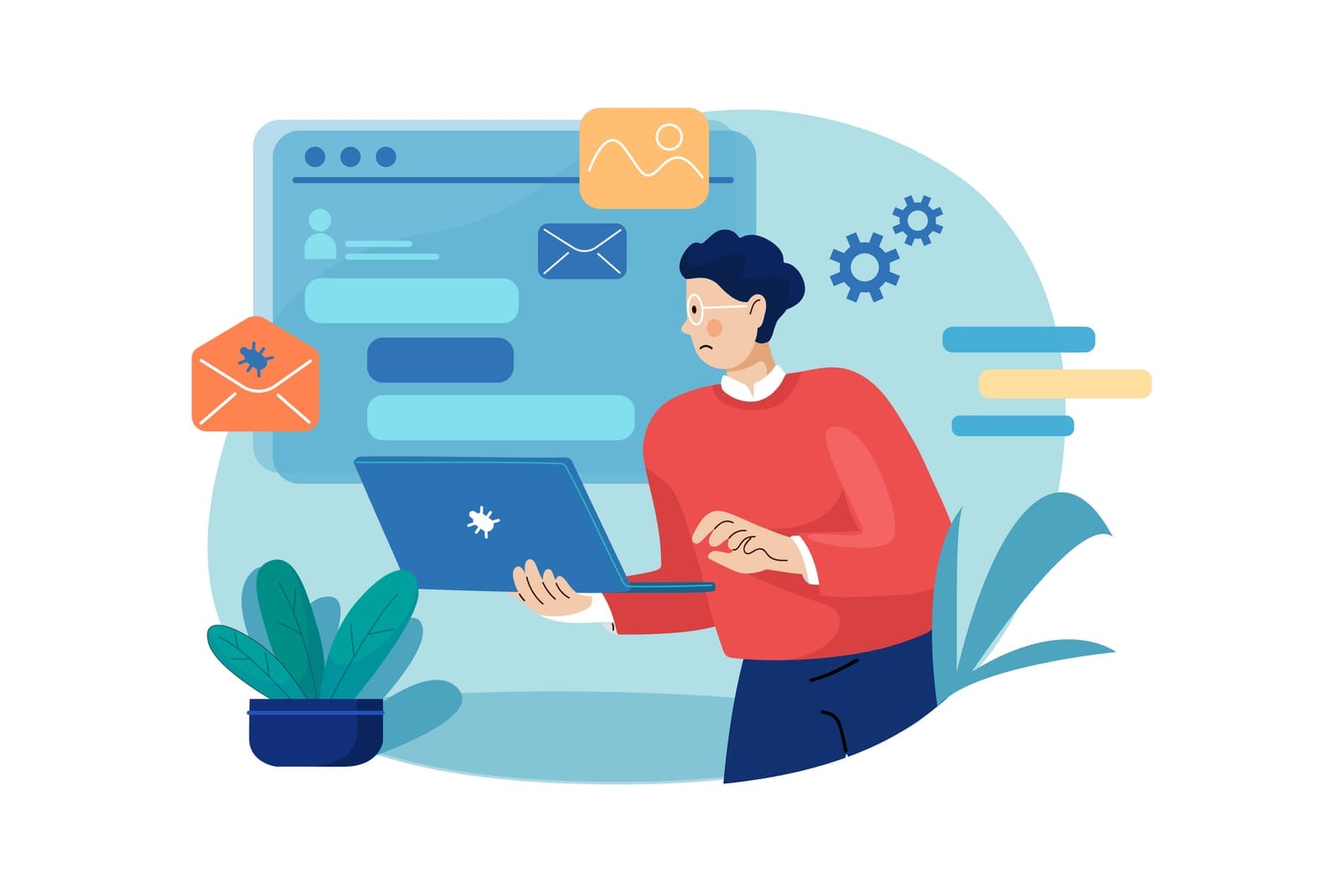
Key defences against phishing and BEC
- Secure cloud email with advanced threat protection
- Use reputable cloud‑based email platforms with built‑in spam, malware, and phishing protection.
- Enable advanced features such as suspicious link scanning, attachment sandboxing, and impersonation detection.
- MFA on all critical accounts
- Apply multi‑factor authentication across email, finance systems, cloud apps, and remote access.
- Even if a password is stolen, MFA makes it much harder for attackers to log in.
- Email security policies (SPF, DKIM, DMARC)
- These are technical settings that help the internet verify that emails really come from your domain:In plain terms: these controls reduce the likelihood that attackers can send convincing fake emails that appear to come from your company.
- SPF: Lists which servers are allowed to send emails for your domain.
- DKIM: Cryptographically signs your emails so recipients can verify they weren’t altered.
- DMARC: Tells receiving mail servers what to do with suspicious emails pretending to be from your domain.
- These are technical settings that help the internet verify that emails really come from your domain:In plain terms: these controls reduce the likelihood that attackers can send convincing fake emails that appear to come from your company.
- Regular staff training and phishing simulations
- Provide ongoing, practical training, not just a one‑off talk.
- Use simple examples that show staff how to spot:
- Slightly wrong email addresses or domains,
- Unusual payment or bank change requests,
- Poor grammar, urgent tone, or unusual file types.
- Run simulated phishing exercises to measure awareness and reinforce good habits in a safe way.
- For a practical programme, see our security awareness training guide.
- Clear financial verification processes
- Put in place out‑of‑band verification for changes to bank details or large payments:
- For example, require a phone call to a known number, not the one in the email.
- Make it a policy: “We never change bank details based on email alone.”
- Put in place out‑of‑band verification for changes to bank details or large payments:

Threat 3: Emerging & Evolving Threats in 2025
Beyond “classic” ransomware and phishing, several new and evolving threats are becoming highly relevant to Singapore SMEs in 2025.
1. AI‑Powered Phishing and Deepfake Scams
Attackers are increasingly using AI tools to:
- Generate high‑quality, localised phishing emails with fewer spelling or grammar errors.
- Mimic writing styles of real colleagues or senior leaders.
- Create deepfake audio (fake voice calls) pretending to be a CEO or director, pressing staff to approve urgent payments or share confidential data.
For an SME, this means scams are becoming more convincing and harder to recognise based purely on tone or language quality.
Defensive focus:
- Strengthen processes (e.g., multi‑step approval for payments) rather than relying on “gut feel”.
- Educate staff about the possibility of fake voice calls or AI‑generated messages.
- Use identity‑aware systems (MFA, secure collaboration tools) so sensitive actions require verified logins, not just a phone call or email.
2. Supply‑Chain and Third‑Party Vendor Risks
Most SMEs now rely on a web of third‑party service providers: cloud apps, outsourced accounting, HR platforms, logistics systems, and more.
Attackers increasingly target this “supply chain” because:
- A single compromised vendor can give them access to many SME customers.
- SMEs often assume that if a vendor is reputable, everything is safe by default.
If a vendor’s system is breached, attackers may:
- Use trusted channels (shared portals, email addresses) to deliver malware.
- Access shared data stored in that vendor’s environment.
- Abuse existing connections (e.g., remote access tools) into your systems.
Defensive focus:
- Maintain a vendor list and understand what data each vendor holds and what access they have.
- Prefer vendors who support modern security controls (MFA, encryption, regular audits).
- Limit third‑party access to “just enough” and remove old or unused accounts and integrations.
- Include security expectations in contracts where possible. Not sure what to ask your vendors? Review these red flags and questions to ask.
3. Cloud Misconfigurations and Exposed Remote Access
Cloud adoption is high among Singapore SMEs, but many deployments are rushed or piecemeal. Common issues include:
- Cloud storage (e.g., file shares, buckets) left public by mistake, exposing sensitive documents.
- Remote access tools or admin portals exposed directly to the internet with weak or reused passwords.
- Inconsistent settings across different cloud apps, leading to gaps attackers can exploit.
These are not flaws in the cloud itself, but in how it is set up and managed.
Defensive focus:
- Implement centralised identity and access management (one identity per user, consistent policies).
- Use MFA and strong password policies everywhere.
- Regularly review cloud configurations against security baselines and best practices.
- Limit direct remote access from the internet and use secure gateways and VPNs where necessary.
Our Cloud‑First, Proactive Defence Approach for Singapore SMEs
Trying to tackle all these threats with ad‑hoc tools and reactive “call‑when-broken” support is stressful and inefficient — especially for SMEs without in‑house security specialists.
A cloud‑first, managed IT model gives you a more secure, modern, and predictable foundation, without the heavy upfront investment of traditional on‑premise infrastructure.
As a Singapore‑based, service‑focused managed IT partner, we specialise in helping SMEs modernise and secure their environment using cloud, automation, and best‑practice security — shifting IT from rigid CAPEX to more flexible OPEX.
Here’s how that translates into concrete protection.
1. Centralised Identity and Access (SSO, MFA, Least Privilege)
We help you move toward a model where:
- Each employee has one central identity (Single Sign‑On, or SSO) used across your key business apps.
- MFA is enabled by default for high‑risk actions and sensitive systems.
- Access is granted based on roles and “least privilege”: staff only see what they genuinely need.
This significantly reduces the risk of — and supports a Zero Trust security approach:
- Password reuse across systems,
- Former staff retaining access, and
- Attackers moving freely if one account is compromised.
2. Cloud‑Based Security Monitoring, Logging, and Alerting
Instead of relying on someone noticing that “something feels slow” or “files look strange”, we:
- Deploy cloud‑based tools that collect logs from endpoints, servers, and cloud platforms.
- Use these tools to detect unusual behaviour, such as:
- Logins from strange locations,
- Sudden file encryption activity,
- Unexpected changes to admin accounts.
- Set up alerting and response playbooks, so when something suspicious happens, it’s investigated quickly — not weeks later.
3. Automated Patch Management and Secure Baselines
Unpatched systems and inconsistent settings are a common entry point for attackers. We address this by:
- Using automation to roll out updates and security patches to devices and servers on a regular, controlled schedule.
- Defining configuration baselines (standard, secure settings) for endpoints and cloud services, so new devices or accounts are safe from day one.
- Monitoring for drift from these baselines and correcting issues before they turn into incidents.
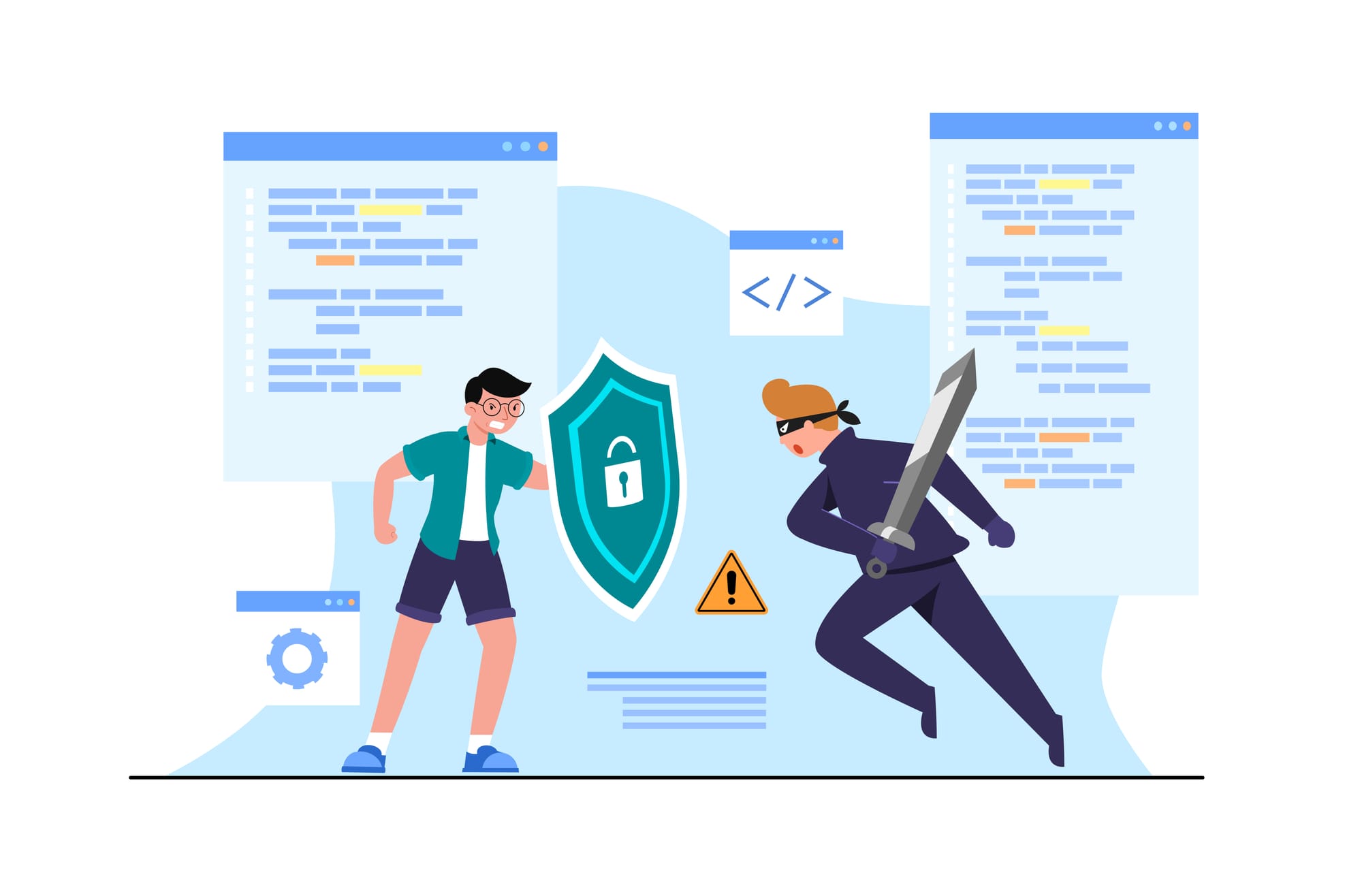
4. Scalable Cloud Backup and Disaster Recovery
We design and manage cloud‑based backup and recovery solutions that (for a broader planning checklist, see our Singapore SME disaster recovery guide):
- Continuously or regularly back up your key systems and data to secure cloud storage.
- Use versioning and immutability features where appropriate to protect against ransomware.
- Include documented and tested recovery procedures so that, if the worst happens, you can bring systems back in hours — not days.
This isn’t just about technology; it’s about giving management confidence that the business can survive a cyber incident.
5. A True Fee‑Only, Vendor‑Neutral Partnership
Many IT providers still rely on vendor commissions, hardware mark‑ups, or software resale margins. That can create a conflict of interest: are they recommending what’s best for your business, or what pays them the highest rebate?
Our model is different:
- We operate as a true fee‑only Managed Service Provider—no vendor commissions, no hardware/software push, fully client‑first and transparent.
- We remain committed to a transparent, client‑centred model, free from reliance on vendor commissions or push‑based hardware/software sales, enabling us to offer truly objective IT solutions.
- Every recommendation, from cloud platform to security tool, is based solely on what aligns with your business needs, risk profile, and budget.
This approach empowers you to make informed decisions and optimise your IT investments with confidence.
6. Proactive, Ongoing Security – Not Just “Break‑Fix” IT
Cybersecurity is not a one‑time project; it’s an ongoing process.
As a local Singaporean company with an agile and responsive team, we deliver personalised, face‑to‑face service you won’t find with one‑size‑fits‑all providers. Our managed security approach typically includes:
- Continuous monitoring of critical systems and alerts.
- Regular security reviews and recommendations as your business and the threat landscape evolve.
- User training and awareness sessions tailored to your staff and industry.
- Policy development and refinement, such as acceptable use, access control, backup, and incident response plans.
- Support for regulatory and customer requirements, including PDPA considerations and security expectations from larger clients.
The goal is simple: fewer nasty surprises, faster response, and a clear roadmap for improving your security posture over time.

Take the Next Step: Complimentary IT & Cybersecurity Consultation for Singapore SMEs
The cybersecurity threats facing Singapore SMEs in 2025 — ransomware, phishing and Business Email Compromise, AI‑driven scams, supply‑chain risks, and cloud misconfigurations — are real and growing. But they are also manageable with the right strategy, tools, and partner.
You don’t need a large in‑house security team to be well‑protected. You do need:
- Clear, business‑level visibility of your risks,
- A modern, cloud‑first IT foundation,
- Practical security controls that fit your size and budget, and
- A trusted, transparent partner to guide and support you.
As Singapore’s progressive, cloud‑first managed IT partner for SMEs, we focus on helping you:
- Simplify and secure your IT environment,
- Shift IT spending from heavy upfront CAPEX to flexible OPEX, and
- Free your team to focus on what matters most: growing your business.
We invite you to contact us today for a complimentary IT / cybersecurity consultation. In this no‑obligation session, we’ll:
- Review your current IT and security posture,
- Identify key gaps and quick‑win improvements,
- Discuss how cloud, automation, and best‑practice security can reduce your risk and cost.
Whether you’re worried about ransomware, suspicious emails, remote access, or just want a professional second opinion on your current setup, we’re here as your local, Singapore‑based, service‑focused partner; delivering transparent, fee‑only advice and personalised support for your SME.
Reach out today and discover how we can help you transform and secure your IT environment — before the next cyber threat has a chance to strike.