
Second Opinion IT Consulting: When to Get an Independent Review Before a Big Purchase

Before you begin
Intended reader: Small and mid-sized business owners, executives, finance leaders, and IT managers assessing significant technology purchases or transformation projects.
Primary takeaway: An independent IT review is not primarily about finding the cheapest option. It is about testing whether the proposed solution fits the organization’s objectives, risk tolerance, operating model, budget, and long-term plans before the business commits.
Assumptions: This article discusses general decision-making practices. The appropriate technology, security controls, contract terms, and compliance obligations depend on the organization’s industry, location, data, architecture, and risk tolerance.
Any regulatory, legal, tax, financial, or security conclusion should be verified against current requirements and reviewed by the appropriate qualified adviser. This article is general information and does not replace a tailored technical, legal, security, or financial assessment.

Why a second opinion matters before a major IT purchase
A major technology purchase can affect much more than the IT department. It may change how employees work, how customers access services, how data is protected, and how much the organization spends every month for years to come.
Examples include:
- Replacing servers or other infrastructure
- Moving workloads to the cloud
- Adopting a hybrid-cloud model
- Selecting a cybersecurity platform or managed security service
- Refreshing switches, wireless networks, firewalls, or internet connectivity
- Implementing enterprise software
- Replacing backup or disaster-recovery systems
- Standardizing endpoint-management tools across the organization
The technical question is often framed as: “Will this solution work?”
That question is necessary but incomplete. A stronger review also asks:
- Does it solve the actual business problem?
- Is the proposed scope proportionate to the need?
- Can the organization operate and secure it effectively?
- What will it cost over several years?
- What happens if the project runs late or fails?
- How difficult will it be to change direction later?
- Are there simpler, smaller, or temporary alternatives?
- Would doing nothing for now be a rational decision?
An independent consultant provides a structured challenge to the proposal before the organization makes an expensive or difficult-to-reverse commitment.

What an independent IT consultant does
A second-opinion consultant reviews a proposed technology decision from outside the sales and delivery chain. The consultant may assess the business case, requirements, architecture, security, implementation plan, costs, risks, and alternatives.
The role is not automatically to reject the existing proposal. A good consultant may conclude that the proposed solution is appropriate. The value lies in reaching that conclusion through an impartial review rather than relying solely on the party that stands to sell or implement the solution.
How the role differs from other parties
Vendor or manufacturer
A vendor develops or owns a product or service and usually has a commercial interest in selling it. Vendor technical teams may provide useful product information, demonstrations, and implementation guidance, but they are not generally responsible for comparing the product against every alternative or determining whether the purchase is justified.
Reseller or procurement partner
A reseller may provide pricing, licensing, hardware, deployment, or support. Some resellers offer valuable expertise. However, their compensation may be connected to the products or services purchased, so the buyer should understand whether recommendations are influenced by margins, incentives, preferred-partner arrangements, or sales targets. If you’re comparing models, see how MSPs differ from resellers.
Internal IT team
An internal IT team understands the organization’s systems, users, history, and operational constraints better than an outside reviewer. It should be involved in the decision. However, internal teams may have limited time, specialized knowledge, or independence—particularly if they designed the current environment, advocated for the project, or are responsible for delivering it with limited resources.
A second opinion should complement internal IT, not undermine it. For a broader view of trade-offs, consider this comparison of managed services vs. building an in-house team.
Implementation partner
An implementation partner is responsible for configuring, migrating, integrating, or supporting a solution. Its expertise is especially valuable during delivery. But the implementation partner may have an incentive to define the project around its own services, preferred technology, or delivery capabilities.
Independent consultant
An independent consultant should be engaged to evaluate the decision itself. The consultant may recommend proceeding, changing scope, comparing alternatives, postponing the project, or retaining the current system temporarily.
Independence is not simply a marketing label. It should be demonstrated through transparent fees, disclosed relationships, and a willingness to recommend an outcome that does not generate additional work.

Warning signs that a second opinion is justified
A review is particularly valuable when the project is expensive, complex, disruptive, difficult to reverse, or important to business continuity.
Look for the following warning signs.
Requirements are unclear
If the organization cannot clearly explain the problem it is trying to solve, it is too early to approve a solution.
For example, “we need a new cloud platform” is not a complete requirement. The underlying need might be:
- Better remote access
- Reduced hardware maintenance
- Improved disaster recovery
- Faster application delivery
- Support for a growing workforce
- A response to an audit finding
- More predictable operating costs
Without clear objectives, a project can become an expensive technology upgrade without a measurable business outcome.
The proposal is difficult to understand
Decision-makers should be able to understand the major components, assumptions, exclusions, dependencies, and ongoing costs. A proposal that relies heavily on unexplained technical terminology or combines multiple products and services into a single opaque figure deserves closer examination.
A second opinion can translate the proposal into business terms and identify what remains uncertain. These seven questions can also help you evaluate providers and proposals.
The cost appears unusually high—or unusually low
A high price does not automatically mean the proposal is unreasonable. It may include substantial migration work, resilience, security, support coverage, or licensing obligations.
Likewise, a low initial price may exclude:
- Data migration
- Integration work
- Training
- Premium support
- Backup
- Monitoring
- Security features
- Future user or storage growth
- Termination or data-export costs
The appropriate question is not merely whether the quote is high or low. It is whether the cost is complete, proportionate, and aligned with the required outcome. For context on pricing models, here’s a practical look at transparent, tiered pricing.

The vendor is applying pressure
Warning signs include:
- “This price is valid only today.”
- Pressure to sign before requirements are finalized
- Claims that a decision must be made immediately without evidence
- Reluctance to provide assumptions or itemized pricing
- Discouragement from seeking another opinion
- Promises that implementation will be effortless despite major dependencies
Legitimate deadlines do exist, but pressure should not replace analysis. Review common red flags and the questions to ask before you commit.
The proposal is one-size-fits-all
A solution designed for a large enterprise may be excessive for a small organization. Conversely, a standard package may omit capabilities needed by a regulated, distributed, or operationally critical business.
The right design depends on factors such as:
- Number and location of users
- Critical applications
- Data sensitivity
- Availability requirements
- Existing architecture
- Internal skills
- Growth expectations
- Budget and risk tolerance
Adopting a vendor-agnostic strategy can help you avoid unnecessary lock-in and overspend.
Recurring fees are significant
Subscription costs can improve predictability and reduce upfront spending, but they create long-term commitments. Review:
- Per-user, per-device, per-workload, or consumption-based pricing
- Minimum quantities
- Annual price increases
- Overage charges
- Feature tiers
- Support charges
- Storage and data-transfer fees
- Contract renewal and termination provisions
A recurring fee should be evaluated over the expected life of the service, not only against the first-year budget. Growing SaaS portfolios can quietly inflate costs—see how to manage licenses, costs, and security effectively.
The project will disrupt operations
A network refresh, software replacement, cloud migration, or security-platform deployment can affect employees and customers. If the plan includes downtime, endpoint changes, data migration, application reconfiguration, or major training, an independent review can test whether the timeline and safeguards are realistic. If downtime is on the table, understand its real financial impact for SMEs.
The organization cannot explain how it would reverse course
Every major project should address failure modes. If the business cannot answer how it would restore service, retrieve data, operate temporarily, or return to the previous system, it may be committing before the risks are understood.

What an independent review should examine
A useful review is more than a product comparison. It should assess the decision across business, technical, financial, operational, and contractual dimensions.
1. Business goals and technical requirements
The review should begin with the desired outcome.
Questions include:
- What business problem is the project intended to solve?
- Which objectives are essential, and which are merely desirable?
- How will success be measured?
- Which users, locations, applications, and processes are affected?
- What service levels are actually required?
- What performance, availability, storage, or recovery objectives are necessary?
- Which existing capabilities should be retained?
- Are the requirements documented and approved by the relevant stakeholders?
Technical requirements should be specific enough to test. For example, “better security” could mean stronger identity controls, improved monitoring, faster incident response, better patching, or reduced exposure from unsupported systems. Each has different implications for cost and implementation.
The reviewer should distinguish genuine requirements from preferences, assumptions, and features included because they are available.
2. Security, privacy, compliance, and resilience
Security and compliance are related but not identical.
A solution may include security features without satisfying the organization’s governance obligations. Conversely, a compliance requirement may be addressed through process, configuration, contracts, staff training, or technical controls rather than through a single product.
The review should consider:
- Identity and access management
- Administrative privileges
- Encryption and key management
- Logging and monitoring
- Vulnerability and patch management
- Backup protection
- Incident detection and response
- Data location and handling
- Third-party access
- Retention and deletion
- Business continuity
- Recovery time and recovery point objectives
Recovery time objective means how quickly a service should be restored. Recovery point objective means how much data loss, measured in time, the business can tolerate.
The relevant requirements depend on the organization’s sector, contracts, geographic footprint, data types, and applicable laws. A consultant should identify issues requiring legal or compliance advice rather than presenting a generic technical opinion as a formal compliance conclusion. Non-technical owners may find this compliance audit checklist useful when framing requirements.

3. Total cost of ownership
The purchase price is only one part of the financial decision. A total-cost-of-ownership analysis should consider the expected cost of owning, operating, changing, and eventually retiring the solution.
Potential cost categories include:
- Hardware or subscription charges
- Licensing and support
- Implementation and configuration
- Data migration
- Integration and custom development
- Backup and disaster recovery
- Security monitoring
- Connectivity and data transfer
- Internal staffing
- External managed services
- Training and change management
- Testing and parallel operation
- Downtime or productivity loss
- Upgrades and future capacity
- Contract renewal increases
- Exit, export, or migration costs
The review should show assumptions clearly. For example, a cloud estimate may depend on storage growth, usage patterns, data transfer, backup retention, and the number of environments. A server replacement may depend on warranty duration, software compatibility, power, cooling, and future expansion.
The purpose is not to force every project into the lowest-cost option. A more expensive solution may be justified if it materially reduces risk or supports a critical business objective. The purpose is to make the trade-offs visible. Hardware refresh timing is often a major driver—see when SMEs should refresh devices and servers.
4. Scalability, interoperability, lock-in, and contract terms
A solution should fit both current operations and plausible future needs.
The reviewer should ask:
- Can capacity be increased without redesigning the entire environment?
- Are there practical limits on users, locations, storage, or workloads?
- Can the solution integrate with existing systems?
- Does it use documented interfaces or proprietary methods?
- What happens if the organization changes its software, provider, or operating model?
- Can data be exported in a usable format?
- Are there dependencies on a single supplier or specialist?
- What support and service levels are contractually committed?
Vendor lock-in occurs when changing providers becomes unusually difficult or expensive because of proprietary technology, data formats, contracts, skills, or integrations. Lock-in is not always unacceptable. It may be a reasonable trade-off for functionality or simplicity. The key is to understand it and decide deliberately.
Contract review should examine renewal terms, service credits, liability, data ownership, confidentiality, subcontractors, security obligations, audit rights where relevant, termination assistance, and the treatment of data after termination. Legal counsel should review clauses where necessary. For a deeper dive into clauses to watch in IT agreements, review this guide to vendor contract negotiation.

5. Project risks, dependencies, and contingency plans
A credible proposal should identify what could go wrong and how the project team will respond.
The review should test:
- Whether the timeline reflects the work involved
- Availability of internal subject-matter experts
- Application and integration dependencies
- Compatibility and capacity assumptions
- Data quality and migration complexity
- Testing requirements
- User training and adoption
- Supplier dependencies
- Change windows and business blackout periods
- Approval and communication processes
- Rollback criteria
- Temporary operating procedures
- Contingency funding
A rollback plan describes how to return to the previous state if the new system fails or does not meet acceptance criteria. It may not always be possible to reverse every change, especially after data conversion or extended parallel operation. In those cases, the project needs an alternative recovery plan.
6. Whether alternatives are viable
A second opinion should not assume that the proposed project is the only option.
Alternatives may include:
- Delaying the project while gathering better information
- Replacing only the highest-risk component
- Reducing the scope
- Extending the life of the current system with targeted remediation
- Improving configuration or processes
- Using an existing capability more effectively
- Piloting the solution with a limited group
- Phasing the implementation
- Outsourcing a specific function rather than the entire environment
- Retaining the current system until a dependency is resolved
The “do nothing” option should be evaluated honestly. Keeping the current system may avoid immediate disruption but increase security, support, or continuity risks. Delay is not automatically conservative; it is a decision with consequences that should be documented.

Situations where a second opinion is especially valuable
Server or infrastructure replacement
A proposed replacement may be technically sound but still inappropriate if workloads could be consolidated, migrated, or retired. Review capacity requirements, application compatibility, warranty and support assumptions, backup, resilience, and the organization’s expected growth. For end-to-end control of devices and servers, this IT asset lifecycle guide can help.
Cloud migration or hybrid-cloud adoption
Cloud migration is not simply a relocation exercise. The review should examine application suitability, identity, connectivity, data movement, backup, monitoring, operational ownership, cost controls, and exit options.
A hybrid model—using both local and cloud resources—may address specific requirements, but it can also create additional complexity. The organization should understand who will manage the connections, identities, security controls, and failure scenarios. For broader design considerations, see how to build a secure, scalable, remote-ready environment.
Cybersecurity platform or managed security service
A new security product may provide useful capability, but effectiveness depends on configuration, coverage, response processes, staffing, and integration.
The reviewer should ask:
- What threats or control gaps is the service intended to address?
- Which devices, identities, applications, and locations are covered?
- Who investigates alerts?
- Who is authorized to respond?
- What are the response hours and escalation procedures?
- How are false positives handled?
- What evidence and reporting are provided?
- What remains the customer’s responsibility?
Not sure whether you need an MSP, MSSP, or a consultant? Start with this overview. Buying another tool does not automatically resolve an underlying process or governance problem.

Network refresh
Network equipment affects connectivity, productivity, security, and sometimes physical operations. A review can validate coverage, capacity, segmentation, redundancy, internet requirements, site conditions, supportability, and the migration sequence.
Wireless design in particular should be based on the building, users, applications, interference, and coverage objectives—not simply the number of access points in a standard package.
Enterprise software implementation
Software may appear to meet functional requirements while creating substantial process, integration, training, and data-conversion work. An independent review can test whether the organization is prepared for configuration decisions, ownership, user adoption, reporting, and ongoing administration. When third-party apps are involved, vet integrations carefully.
Backup and disaster recovery
Backup is not the same as recoverability. The review should consider what is protected, how often backups run, whether they are isolated from common threats, how restoration is tested, and how long recovery will take.
A proposal should be assessed against the business’s actual tolerance for interruption and data loss.
Endpoint-management or workplace-standardization projects
Centralized management can improve consistency, but deployment may affect privacy, user experience, application compatibility, and support processes. Review device coverage, administrative roles, policies, enrollment, exceptions, and the effort required to manage the platform after deployment. Endpoint management is also a key factor when choosing a managed IT plan.

When an independent review may be unnecessary or offer limited value
A second opinion is not always the best use of time or money.
It may offer limited value when:
- The purchase is low-cost and easily reversible.
- Requirements are simple, stable, and already well documented.
- The organization has strong internal expertise and an effective review process.
- The selected solution is mandated by a customer, parent company, or established architecture.
- The project is a routine renewal with no material scope or contract change.
- The review would occur after an irreversible commitment has already been made.
- There is insufficient information to assess the proposal meaningfully.
- The cost of the review is disproportionate to the decision.
Even then, a lightweight review may be worthwhile for a high-impact decision. The appropriate level of diligence should match the project’s cost, complexity, disruption, and risk.
An independent review also cannot eliminate all uncertainty. Forecasts may be incomplete, requirements may change, suppliers may underperform, and implementation may reveal unknown conditions. The review improves decision quality; it does not guarantee a particular outcome.

How to choose a genuinely independent consultant
Look for relevant experience
Choose someone who has reviewed or delivered projects similar to yours in scale and complexity. Relevant experience might include:
- The technology category under consideration
- Cloud, infrastructure, networking, security, or software projects
- Migration and integration work
- Business continuity and recovery planning
- Operating environments comparable to yours
- The practical realities of small and mid-sized organizations
Experience should be relevant to your decision, not merely broad.
Ask how independence is maintained
Request a clear disclosure of:
- Vendor commissions
- Referral fees
- Reseller relationships
- Preferred-partner arrangements
- Ownership interests
- Plans to sell implementation or managed services
- Subcontractor relationships
A consultant may provide later implementation services, but that relationship should be disclosed. Consider separating assessment from implementation when the project is especially sensitive. To understand how commission-based incentives can distort recommendations, see this explainer on provider commissions.
Require transparent fees
The engagement should explain:
- Fixed fee, hourly fee, or staged pricing
- Included meetings and analysis
- Travel or other expenses
- Additional-work rates
- Expected duration
- Payment milestones
- What is excluded
A transparent fee structure makes it easier to judge whether the review is proportionate. Many SMEs prefer a fee-only advisory model to maintain neutrality.

Define deliverables before starting
Possible deliverables include:
- Written assessment
- Requirements validation
- Architecture review
- Cost model
- Risk register
- Alternatives analysis
- Contract and licensing observations
- Implementation-readiness review
- Executive briefing
- Decision recommendation
Avoid engagements described only as “a quick look” unless the scope is genuinely limited and documented.
Check references
Ask for references from organizations that faced comparable decisions. Questions for references include:
- Did the consultant identify issues that mattered?
- Were the recommendations understandable?
- Did the consultant remain independent?
- Was the report practical?
- Did the consultant acknowledge uncertainty?
- Did the work improve the decision, even when it did not produce a lower price?
Assess professional judgment
A credible consultant should be willing to recommend:
- Proceeding as proposed
- Proceeding with changes
- A phased approach
- A different solution
- Delaying the purchase
- No change
A consultant who always recommends a new project is not providing an independent decision review.

What to provide before the review
The quality of the assessment depends partly on the information available. Provide as much of the following as is practical:
- The original proposal and statement of work
- Itemized pricing and licensing information
- Contract drafts and renewal terms
- Business objectives and project rationale
- Current architecture diagrams
- Hardware, software, and device inventories
- Network and connectivity information
- Application dependencies
- User and site counts
- Data classifications and storage requirements
- Current support arrangements
- Incident, performance, or availability history
- Backup and recovery documentation
- Security assessments or audit findings
- Relevant policies and requirements
- Internal staffing and skills information
- Growth assumptions
- Implementation timeline
- Known constraints and deadlines
- Previous assessments or failed projects
Sensitive information should be shared through an appropriate secure process. The consultant should identify what access is needed and why.

What a useful final report should contain
A strong report should be clear enough for executives and detailed enough for technical stakeholders.
Executive summary
State:
- The decision being evaluated
- The key findings
- The major risks
- The principal assumptions
- The recommended next step
Current-state assessment
Describe the existing environment, relevant limitations, dependencies, and known risks. The report should distinguish verified facts from information provided by stakeholders and assumptions requiring confirmation.
Requirements and success criteria
Map the proposed solution to agreed business and technical requirements. Identify requirements that are missing, weakly defined, or unsupported by evidence.
Solution and alternatives analysis
Compare the proposed approach with reasonable alternatives, which may include reduced scope, phased delivery, delay, retention, or a different architecture.
Cost and commercial analysis
Present expected one-time and recurring costs, assumptions, exclusions, internal effort, migration, training, support, renewal, and exit considerations.
Risk register
List risks by likelihood, impact, owner, mitigation, and residual exposure. Residual exposure is the risk that remains after planned safeguards are applied.
Implementation and contingency view
Assess the timeline, dependencies, testing, acceptance criteria, rollback or recovery plans, communications, and resource requirements.
Recommendation
The conclusion should be specific. Examples include:
- Proceed, subject to named conditions
- Obtain revised proposals
- Run a limited pilot
- Split the project into phases
- Resolve identified dependencies first
- Defer the project
- Retain the current system with defined safeguards
- Do not proceed with the proposed approach
The report should explain why, not merely provide a yes-or-no answer.
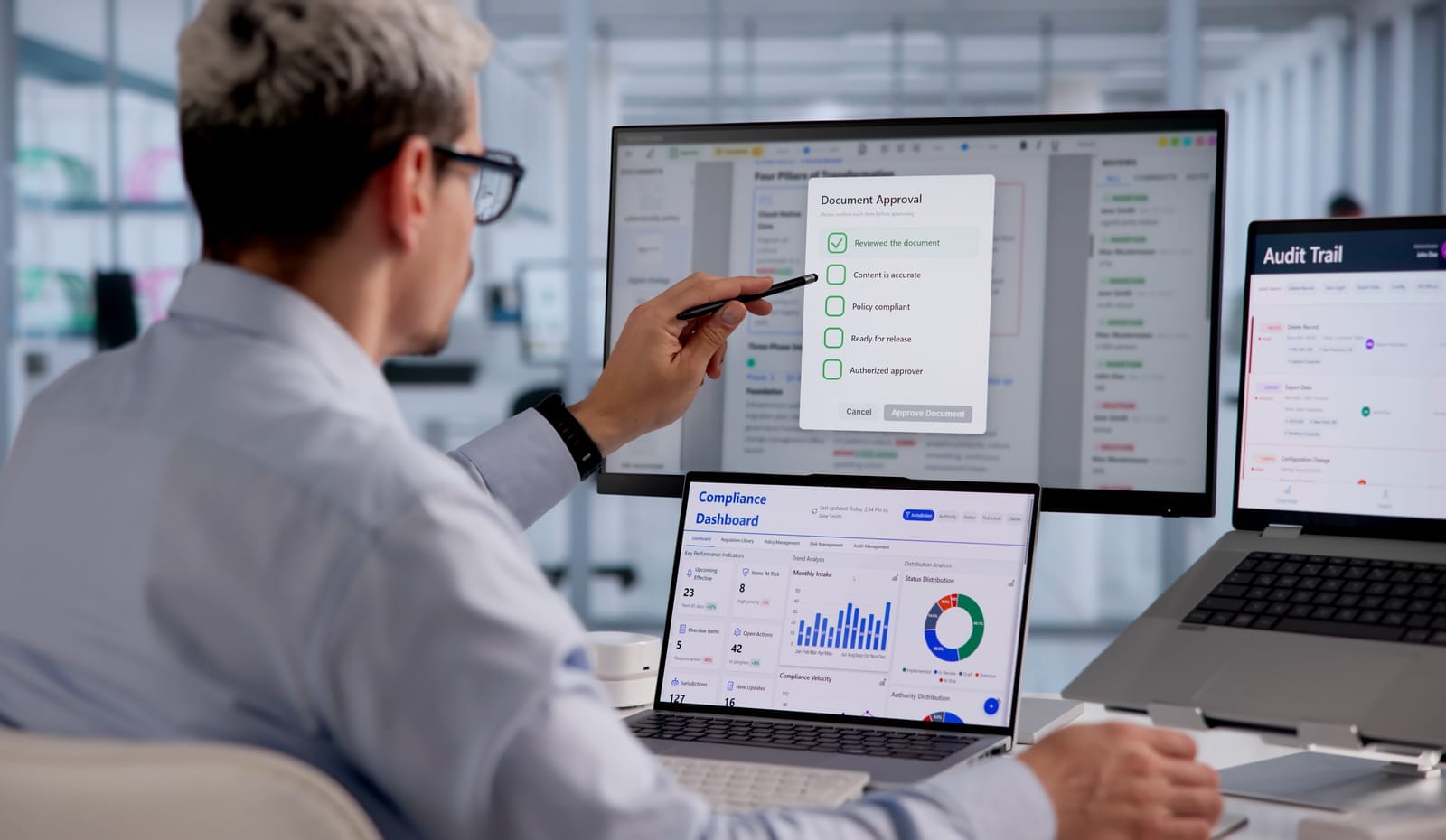
A practical decision checklist
Before approving a major technology purchase, ask:
Business fit
- Is the business problem clearly documented?
- Are the desired outcomes measurable?
- Does the proposed scope match the problem?
Technical fit
- Are requirements validated?
- Does the design work with existing applications and data?
- Can the organization operate and support it?
Security and resilience
- Are access, monitoring, backup, recovery, and incident responsibilities clear?
- Does the design reflect the organization’s actual risk tolerance?
- Have industry or contractual requirements been separately verified?
Financial fit
- Are one-time and recurring costs visible?
- Have internal staffing, training, migration, downtime, renewal, and exit costs been considered?
- Is the financial model based on realistic usage and growth?
Commercial fit
- Are renewal, price-change, termination, data-export, and support terms understood?
- Is vendor lock-in acceptable and deliberate?
- Are responsibilities and service levels documented?
Delivery readiness
- Is the timeline credible?
- Are dependencies and decision owners identified?
- Are testing, acceptance, rollback, and contingency plans defined?
Independence
- Has someone without a financial stake in the sale reviewed the decision?
- Would the reviewer be comfortable recommending no change?
If several answers are “no” or “unknown,” an independent review is likely justified.

Clear next steps
- Document the decision. Write down the business problem, desired outcomes, deadline, budget range, and consequences of delay.
- Collect the evidence. Gather proposals, pricing, contracts, inventories, diagrams, requirements, and relevant operational data.
- Classify the decision. Consider cost, complexity, disruption, reversibility, security impact, and business criticality.
- Choose the review scope. A small purchase may need a short proposal and cost review; a transformation project may need architecture, security, commercial, and implementation analysis.
- Screen consultants for independence. Confirm experience, conflicts, fees, deliverables, and references.
- Invite challenge. Ask the reviewer to assess the proposed approach and reasonable alternatives, including delay, reduced scope, and no change.
- Make the decision explicit. Record the chosen option, assumptions, conditions, risks, owners, and review date.
- Revisit the decision when conditions change. Significant changes in cost, scope, architecture, regulation, staffing, or business priorities should trigger another review.
A second opinion is most useful before contracts are signed, dependencies are created, or migration work begins. It should be treated as a decision-quality exercise—not as a price negotiation disguised as technical advice.
When a technology project carries substantial cost, complexity, operational disruption, or business risk, document the requirements and obtain an independent review proportionate to the decision. The right result may be to proceed, modify the plan, phase the work, delay it, or retain the current system for now. What matters is that the organization understands the trade-offs and chooses deliberately.