
MSP vs IT Reseller: Why the Business Model Matters for Your Technology Decisions

When you’re making technology decisions for a small or mid-sized business, you’ll often hear two labels:
- Managed Service Provider (MSP)
- IT Reseller or Value-Added Reseller (VAR)
On paper, both can help you “solve IT problems.” In practice, they earn money in different ways, structure their relationships differently, and are nudged by different incentives. Those differences can quietly shape the advice you receive, the solutions you deploy, and your long‑term costs.
This article is written for non-technical business leaders—owners, CEOs, CFOs, operations leaders—who need to understand how these models work so you can ask better questions and make more informed decisions. If you’re new to managed services, here’s a plain‑English overview of managed IT services for SMEs.

1. Definitions and Context
What is a Managed Service Provider (MSP)?
A Managed Service Provider (MSP) is a service‑first IT partner that takes ongoing responsibility for some or all of your technology environment. You can think of an MSP like an outsourced IT department operating under a subscription or retainer model.
Typical characteristics of an MSP:
- Ongoing management and monitoring
They don’t just install systems and walk away. They monitor, maintain, patch, secure, and support your IT on a day‑to‑day basis. - Subscription / retainer fees
You usually pay a monthly recurring fee, often per user, per device, or per site. This might cover:- Helpdesk support
- Network monitoring
- Security tools
- Backup and disaster recovery
- Routine maintenance and updates
- Service-first, not product-first
A true MSP’s primary “product” is its expertise and labor, not the hardware or software it resells. Some MSPs choose to be fee-only, meaning they deliberately avoid hidden margins or vendor commissions, focusing exclusively on service fees so they can recommend solutions in the client’s best interest without sales pressure. - Long-term, relationship-based
MSPs generally aim for multi-year relationships. Their success depends on keeping your systems stable and your users happy over time.
In short, an MSP is paid to keep things working, not just to get them installed.
What is an IT Reseller / VAR (Value-Added Reseller)?
An IT Reseller or Value-Added Reseller (VAR) is a product‑first provider that primarily earns money by selling hardware and software, often with some added services around those products.
Typical characteristics of a reseller/VAR:
- Product-centric business
Their core is selling:- Servers, laptops, networking gear
- Software licenses (e.g., Microsoft, security tools, line-of-business apps)
- Cloud subscriptions (e.g., SaaS tools, infrastructure services)
- Margins and project fees
They typically earn money via:- Margins on hardware and software (buying from distributors/vendors and selling to you at a markup)
- Project or implementation fees for setting things up, migrating data, and configuring systems
- Project- or transaction-based
Engagements are often tied to specific purchases or projects:- A server refresh
- A new Wi‑Fi rollout
- Moving an application to the cloud
Ongoing support may be offered, but it’s often a smaller portion of their revenue compared to product sales.
- Vendor-aligned
Many resellers build deep relationships with specific vendors (e.g., Dell, HPE, Cisco, Microsoft). They may have sales targets, tiered partner statuses, or rebates tied to those vendors.
On the pricing front, it’s worth considering why your IT partner shouldn’t profit from hardware or software markups in the first place.
Why Do Businesses Encounter Both?
As a business leader, you’ll often cross paths with both:
- When you’re buying hardware or software, you’re likely dealing with a reseller/VAR—even if they also offer managed services.
- When you’re looking for ongoing IT support, helpdesk, security, and strategic advice, you’re often talking to an MSP—who might also resell products.
In reality, many IT companies wear both hats:
- They act as an MSP for ongoing services.
- They act as a reseller when you need to buy equipment or licenses.
That’s not necessarily a problem—but understanding which “hat” they’re wearing in any given conversation helps you interpret their recommendations more clearly. Some providers attempt to reduce conflicts of interest by being vendor‑agnostic, offering no hidden costs, and avoiding commissions or markups on hardware so their advice remains unbiased.

2. Business Model Comparison
The heart of the difference lies in how each model makes money. That, in turn, shapes behavior.
How MSPs Typically Make Money
- Recurring service fees
The bulk of an MSP’s revenue usually comes from predictable, recurring fees:- Monthly per-user or per-device support packages
- Monthly fees for managed security, backup, or cloud management
- Strategic advisory or virtual CIO services
- Occasional project work
MSPs may also charge separately for:- Major migrations (e.g., moving email to Microsoft 365)
- Large upgrades or one-time consulting projects
In a fee-only MSP model, the provider deliberately avoids making money from product margins or vendor kickbacks, focusing solely on transparent service fees and unbiased guidance.
How Resellers / VARs Typically Make Money
- Product margins
Resellers purchase hardware and software from distributors or vendors and sell them to you with a markup. Their profit depends heavily on:- Discounts they negotiate upstream
- The margin they can maintain downstream
- Project and implementation services
They often add “value” through:- Installation
- Configuration
- Customization
- Training
- Vendor incentives
They may receive:- Rebates
- Marketing funds
- Bonuses tied to sales volumes or specific products
- If you’re weighing the impact of rebates and commissions on recommendations, this primer on fee‑only vs commission‑based IT consulting can help.
How This Shapes the Solutions They Propose
- Cloud vs. On-Premises
- Neither choice is automatically “right” or “wrong.” If you’re comparing approaches, see Cloud‑First vs Cloud‑Smart for Singapore SMEs for a strategic lens on the trade‑offs. But the business model can subtly tilt the playing field.
- An MSP, especially a service‑centric or fee‑only one, may lean toward solutions that reduce complexity and ongoing manual work, such as standardized cloud services. If your servers move to a well-managed cloud platform, they spend less time fighting hardware issues and more time on higher‑value strategic support.'
- A reseller may have more incentive to recommend hardware-heavy or license-heavy solutions where they earn significant margin—such as on‑premises servers, storage, or bundled vendor appliances—especially if vendor programs reward those sales.
- Standardization vs. One-Off Products
- MSPs often push for standardization—common devices, consistent software stacks, and repeatable configurations—because that makes support more efficient and predictable.
- Resellers may be more open to one-off or niche solutions if there’s a product opportunity or a specific vendor partnership that fits the request.
- Time Horizons: Long-Term vs. Deal-by-Deal
- MSPs tend to focus on lifetime value and long‑term relationships. Their profitability increases when your environment is stable, users are productive, and support tickets are manageable.
- Resellers can be more transaction-focused—especially those who don’t offer managed services. They may concentrate on closing the next deal: the next refresh, the next license agreement, the next appliance.
- Approach to Support and Maintenance
- For MSPs, support is core to the business: fast response, proactive maintenance, ongoing optimization.
- For many resellers, support is ancillary:
- They may offer a support package, but their main focus might still be the next sale.
- Some rely on vendor support contracts rather than building deep in‑house support capability.

3. Incentives and Recommendations
How Financial Incentives Influence Advice
In any industry, how a company earns money tends to shape behavior. IT is no different.
Common patterns (not universal rules):
- Hardware refresh cycles
- Resellers may be more likely to bring you “refresh” proposals on a regular cycle because selling new hardware is a core revenue driver.
- MSPs—which bear the cost of supporting aging systems—might also recommend refreshes, but often framed in terms of reliability, security, and supportability. A fee‑only MSP has less financial motivation to oversell hardware and more focus on reducing your risk and operating costs.
- Licensing choices
- Resellers who are strong partners with a particular vendor may be quicker to recommend that vendor’s licensing bundles, upgrades, or add‑ons.
- MSPs may pay more attention to fit and manageability:
- Is this licensing model easy to administer?
- Does it integrate well with your existing systems?
- Does it reduce the long‑term support burden?
- Bundled vendor solutions
- Resellers might propose “stack” solutions from one vendor (e.g., all networking and security from Vendor X) if that aligns with partner incentives.
- MSPs often prefer toolsets and platforms that simplify monitoring and support, even if that means mixing vendors, as long as the environment remains supportable.
Not All Resellers Are “Bad,” Not All MSPs Are “Better”
It’s important to keep perspective:
- Many resellers provide excellent advice and implementation. Their close vendor relationships can give you:
- Early access to new technologies
- Better pricing
- Strong escalation paths for support
- Not every MSP is truly neutral or service‑first:
- Some rely heavily on product margins and vendor deals.
- Some may lock you into proprietary tools or long contracts that are hard to exit.
The key idea: The business model nudges behavior, but it doesn’t fully determine character or quality. You still need to evaluate each provider on its own merits.
Scenarios: How an MSP vs. a Reseller Might Respond Differently
Scenario 1: “We’re outgrowing our on‑premises file server.”
Your problem:
Employees struggle to access files remotely. The server is old, backups are inconsistent, and you’re worried about downtime.
Reseller approach:
- Proposes a new on‑premises file server, upgraded storage, and backup hardware.
- Recommends a specific vendor appliance they partner with.
- Revenue comes from:
- Hardware margin
- Installation and migration project
MSP approach:
- Reviews collaboration needs, remote work patterns, and compliance requirements.
- Suggests either:
- Moving to a cloud-based document platform (e.g., a major productivity suite), or
- A hybrid model with cloud sync for remote access
- Focus is on:
- Reducing future support incidents
- Simplifying access and security
- Predictable monthly costs
- Revenue comes from:
- Ongoing management of users, access controls, and backups
- Possibly a one-time migration project
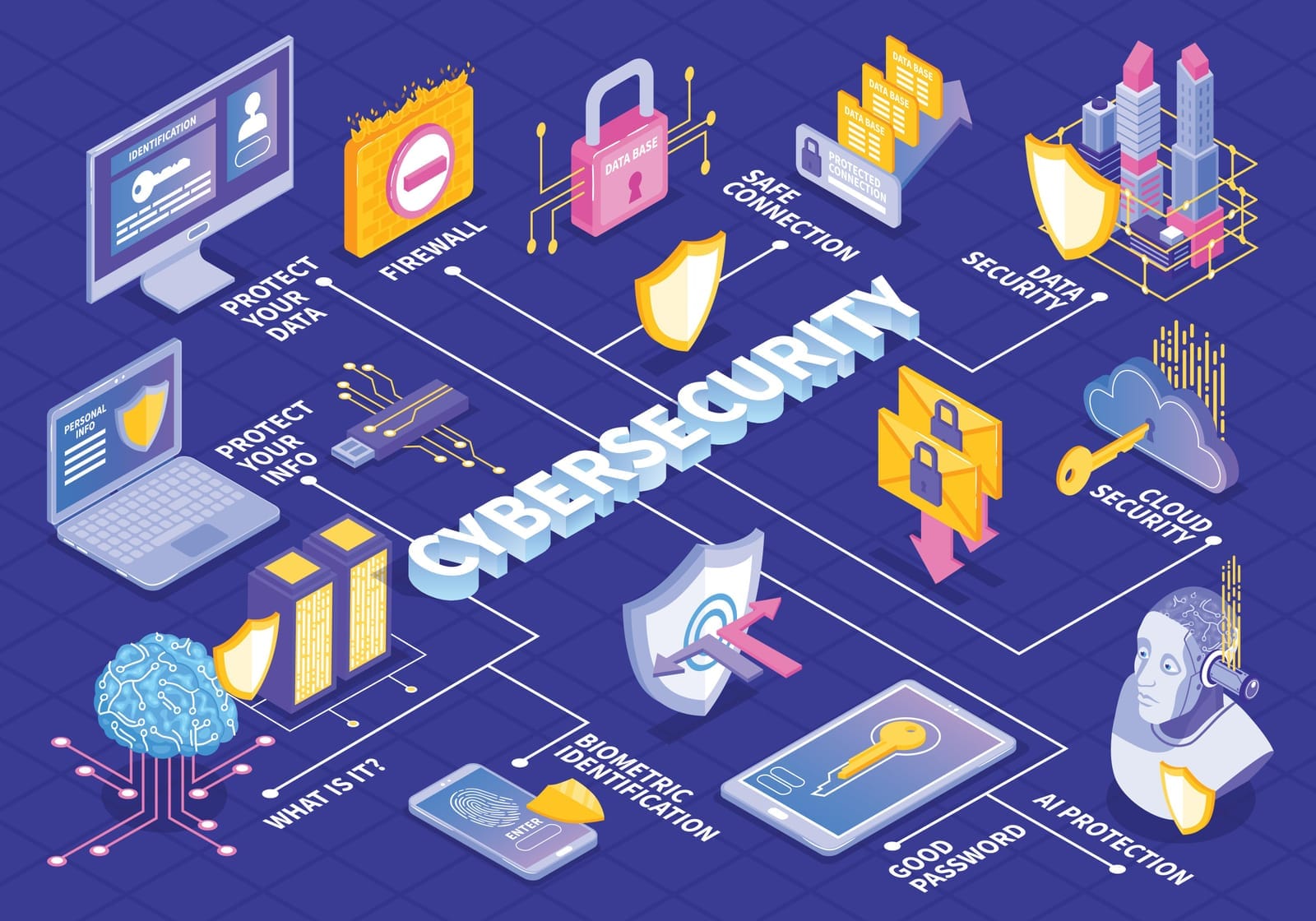
Scenario 2: “We need better cybersecurity.”
Your problem:
Ransomware is in the news; a client is asking about your security posture. You need to reduce risk but don’t know where to start.
Reseller approach:
- Leads with a product suite:
- Firewalls, endpoint protection, email security, maybe a security appliance bundle
- May emphasize products from a specific vendor where they have status and incentives.
- Revenue comes from:
- Selling licenses and hardware
- Initial setup services
MSP approach:
- Begins with a risk assessment:
- User behavior
- Patch management
- Backup and recovery
- Identity and access controls
- Proposes a managed security package:
- Tools (firewall, endpoint, email filtering)
- Plus ongoing monitoring, incident response, and security awareness training
- Revenue comes from:
- Monthly recurring security services
- Continuous improvement over time
Scenario 3: “Our IT person just left; we’re not sure how our systems are being managed.”
Your problem:
You lost your internal IT lead. Documentation is thin, and you’re worried about business continuity.
Reseller approach:
- May offer short-term help:
- A block of hours for support
- A project to “stabilize” key systems
- Main value is:
- Supplying needed tools or upgrades to fill gaps
MSP approach:
- Proposes an ongoing managed services engagement:
- Takes inventory of your environment
- Documents infrastructure and processes
- Sets up remote monitoring and backup
- Becomes your de facto IT department
- Goal is:
- Long-term stability
- Clear SLAs for support
- Strategic guidance as the business evolves

4. Pros, Cons, and Use Cases
Strengths and Limitations of MSPs
Strengths:
- Cost predictability
Fixed or semi‑fixed monthly fees make budgeting easier. - Depth of ongoing support
Dedicated helpdesk, proactive monitoring, patching, and regular reviews. - Business alignment
When your systems are stable and users need less emergency support, the MSP’s margins improve. That can align incentives with your desire for fewer issues. - Strategic guidance
Many MSPs provide a “virtual CIO” function to align IT planning with business goals. - Vendor-agnostic potential
MSPs that operate as fee-only, vendor‑agnostic providers can offer unbiased recommendations without the pressure of reselling products or taking commissions.
Limitations:
- Ongoing commitment
You’re typically signing up for a long‑term relationship (often 1–3 year agreements). - Less ideal for very small or very simple environments
If you are a micro-business with minimal IT needs, a full MSP package might feel like overkill. - Varied quality
Not all MSPs are equally proactive or strategic; some behave more like a “break‑fix shop” with a monthly retainer.
Best use cases for MSPs:
- 20–300 user organizations with ongoing IT complexity:
- Multiple apps, remote work, compliance needs
- Businesses seeking to stabilize IT and offload day‑to‑day management.
- Companies wanting a single accountable partner for IT operations and planning.

Strengths and Limitations of Resellers / VARs
Strengths:
- Strong vendor relationships
They can often secure:- Better pricing
- Early access to products
- Strong escalation paths for issues
- Project expertise
Skilled at:- Complex migrations
- Large deployments
- Specialized hardware or software solutions
- Flexibility for one-off needs
Good fit when you:- Need a specific solution or product
- Have internal IT who will own ongoing support
Limitations:
- Less emphasis on ongoing support
Support quality and responsiveness can vary and may not be the core of their business. - Incentive to sell more product
Revenue depends on product sales and projects, which can create natural pressure to:- Propose larger refreshes
- Favor certain vendors
- Potential for fragmented solutions
If engagements are project-based, you can end up with:- Disconnected tools
- Poor documentation
- Support gaps
Best use cases for resellers:
- Organizations with internal IT teams that just need:
- A reliable channel for purchasing
- Occasional project support
- Situations where a very specific technology stack is required (e.g., industry-specific hardware or software).
- Short, defined projects with clear endpoints.
When to Use Both Together
In many cases, you don’t have to choose either/or—you can combine models:
- Use an MSP as your primary IT partner:
- Day‑to‑day support
- Strategy and governance
- Security and compliance
- Use resellers/VARs for specialized projects or procurement:
- Niche hardware or software
- Vendor‑specific solutions your MSP doesn’t directly provide
This can work particularly well when:
- Your MSP is vendor‑agnostic and willing to coordinate with resellers.
- Your contracts are clear on who owns ongoing support for which systems.

5. How to Evaluate Providers
Knowing the theory is useful, but you still need to assess real‑world providers. Here’s a practical checklist.
Questions to Ask Any Potential Provider
Use these in discovery calls or RFPs to understand whether a provider behaves more like an MSP, reseller, or hybrid.
1. “How do you make money?”
- Look for a clear explanation of:
- The split between recurring service revenue and product/project revenue.
- Whether they earn commissions, markups, or rebates on hardware/software.
A provider that emphasizes transparent, service-based pricing with no hidden costs, no commissions, and no markups is leaning toward a fee‑only, client‑first MSP model.
2. “What percentage of your revenue comes from recurring services vs. product sales?”
- If most revenue is from product sales, you’re likely dealing primarily with a reseller.
- If most is from recurring services, you’re closer to a true MSP.
3. “Do you receive incentives or rebates from specific vendors?”
- Follow-up questions:
- “How do those incentives affect your recommendations?”
- “Do you have vendor sales targets?”
You’re not trying to trap them, just to understand where strong vendor alignments might exist.
4. “How do you decide which vendors or products to recommend?”
Good signs:
- They mention:
- Fit for your business needs
- Total cost of ownership
- Ease of support and security
- They’re open about sometimes recommending competing products based on scenario.
Even better:
- They explain that, as a vendor‑agnostic provider, they select hardware and software purely based on your needs without being tied to specific vendor incentives.
5. “What does your standard engagement look like after the initial project?”
- MSP-like answer:
- Details about ongoing management, documented SLAs, regular reviews, and continuous improvement.
- Reseller-like answer:
- Emphasis on project completion and optional add‑on support with less detail about long‑term management.
6. “Who is responsible for day-to-day support, and how is it staffed?”
- Ask about:
- Response times and escalation paths
- Whether they use in‑house staff or third‑party support
- Hours of operation and after‑hours coverage
MSPs should have a clear, robust support structure.
7. “How do you handle conflicts of interest between what’s best for you and what’s best for us?”
Strong providers may say things like:
- “We separate our consulting function from our sales function.”
- “We commit to vendor‑agnostic recommendations.”
- “We provide line‑item transparency, so you can see exactly what you’re paying for.”
Providers that highlight transparent fees and an independence from hardware/vendor incentives are signaling an effort to minimize conflicts of interest.

What to Look For in Contracts and Proposals
When you review documents, watch for these signals:
1. Pricing Structure
- MSP-style:
- Clear monthly per-user/per-device/per-service pricing.
- Detailed scope of what’s included (support, monitoring, backup, security).
- Reseller-style:
- Large line items for hardware/software.
- Separate (often smaller) line items for labor.
Red flags:
- Vague “bundled” pricing without clear breakout.
- Unclear whether fees are one‑time or recurring.
2. Product vs. Service Emphasis
- Are proposals dominated by product SKUs, or by service descriptions?
- Is the narrative about operational outcomes (uptime, security, user experience) or about features of specific products?
3. Contract Terms
- Lock-in and exit clauses:
- How long is the term?
- What happens if you want to leave early?
- Ownership of configurations and documentation:
- Do you get full access to:
- Network diagrams
- Password vaults (with appropriate controls)
- System documentation
- This matters especially with MSPs; you don’t want to be held hostage by lack of documentation.
- Do you get full access to:
4. Vendor Exclusivity
- Are you required to use specific vendors for all needs?
- Are there penalties if you source hardware or software elsewhere?
A balanced approach allows you to benefit from their preferred vendors while retaining the right to make exceptions where needed.
5. Clarity on Support Boundaries
- Does the proposal clearly distinguish:
- What is fully managed vs. best-effort support?
- What incurs extra charges (after-hours, special projects, major incidents)?
Ambiguity here can lead to surprise bills and misaligned expectations—especially around promises like “unlimited support.”

6. Tone, Evidence, and Industry Patterns
Industry analysts and practitioners often note that:
- Recurring services create a strong incentive for providers to:
- Reduce incidents
- Streamline environments
- Invest in long‑term relationships
- Product-driven models naturally encourage:
- Regular refresh cycles
- Bundled offerings from favored vendors
- A more transactional mindset
These are patterns, not absolutes. Many providers blend both worlds:
- Resellers add managed services to build recurring revenue.
- MSPs build reseller capabilities to offer one‑stop shopping.
Your goal isn’t to label them as “good” or “bad” based solely on model, but to understand the gravitational pull of their business model so you can interpret their advice appropriately.

Conclusion: Why the Business Model Matters
When you’re choosing an IT partner, you’re not just buying technology—you’re buying into a business model.
- An MSP is typically service-first, focused on recurring revenue from ongoing management and support. Their success depends on your systems running smoothly over the long term, and fee‑only, vendor‑agnostic MSPs try to eliminate conflicts of interest by avoiding hidden margins and vendor commissions. For a service‑first, vendor‑neutral approach, you can explore our managed IT services for Singapore SMEs.
- An IT Reseller / VAR is typically product-first, earning from hardware/software margins and implementation projects. Their strength lies in procurement, vendor relationships, and project execution.
In reality, many providers operate as a hybrid, wearing both hats. That’s not inherently problematic—but you need to know which hat they’re wearing when they advise you.
By:
- Asking how they make money,
- Understanding how recurring services vs. product margins shape behavior,
- Reading proposals and contracts with incentives in mind,
you can better interpret recommendations, avoid misaligned expectations, and build IT partnerships that support your business goals—not just the next deal.
Ultimately, the question isn’t “MSP or reseller: which is better?” but rather:
“For this decision, is my partner acting as a service‑first MSP, a product‑first reseller, or a mix of both—and what does that mean for the advice I’m getting?”
When you can answer that, you’re in a much stronger position to make sound, long‑term technology decisions for your business.